
Grainger County Court Record Requests
Need a Circuit Court file? The Grainger County Circuit Court Clerk is the office to call. General Sessions criminal and civil records sit there too. So do Juvenile Court records, though access is limited. Chancery is different. Those files belong to the Clerk and Master. A municipal citation or ordinance case is different again. It stays with the city clerk in Bean Station, Blaine, or Rutledge. County docket PDFs help you spot a current case. They do not show the papers behind each line. You can ask by phone or at the right counter. Staff can also confirm whether mail, email, or fax works. The county publishes no online records-request form and no public terminal policy. Tennessee Case Finder is a subscription service for participating offices. Grainger is not listed among them. Nothing replaces a call to the clerk who actually holds the file.
- Identify the court, case number, case style, and approximate date.
- Name the item, such as a docket sheet, order, judgment, or public file.
- Call to confirm the custodian, location, delivery method, and likely fees.
- Choose inspection, a plain copy, a certified copy, or a redacted public version.
- Ask for an estimate before search, copy, certification, or mailing work begins.
Grainger Court Records Have Split Custody
Figuring out which office holds a Grainger County court record takes one careful step first. Three offices sit nearby, and their names blur easily. Circuit Court Clerk Sherry Clifton holds the Circuit Court docket. She also keeps the General Sessions criminal and civil files. Clerk and Master Vickie B. Greenlee handles Chancery matters. County Clerk Angie J. Lamb keeps vehicle, title, license, marriage, business, and county commission records, but no ordinary trial-court case files. Ask the wrong counter and the staff will send you elsewhere. The official County Clerk profile lays out that split. It is worth a look before any Grainger County court record request.
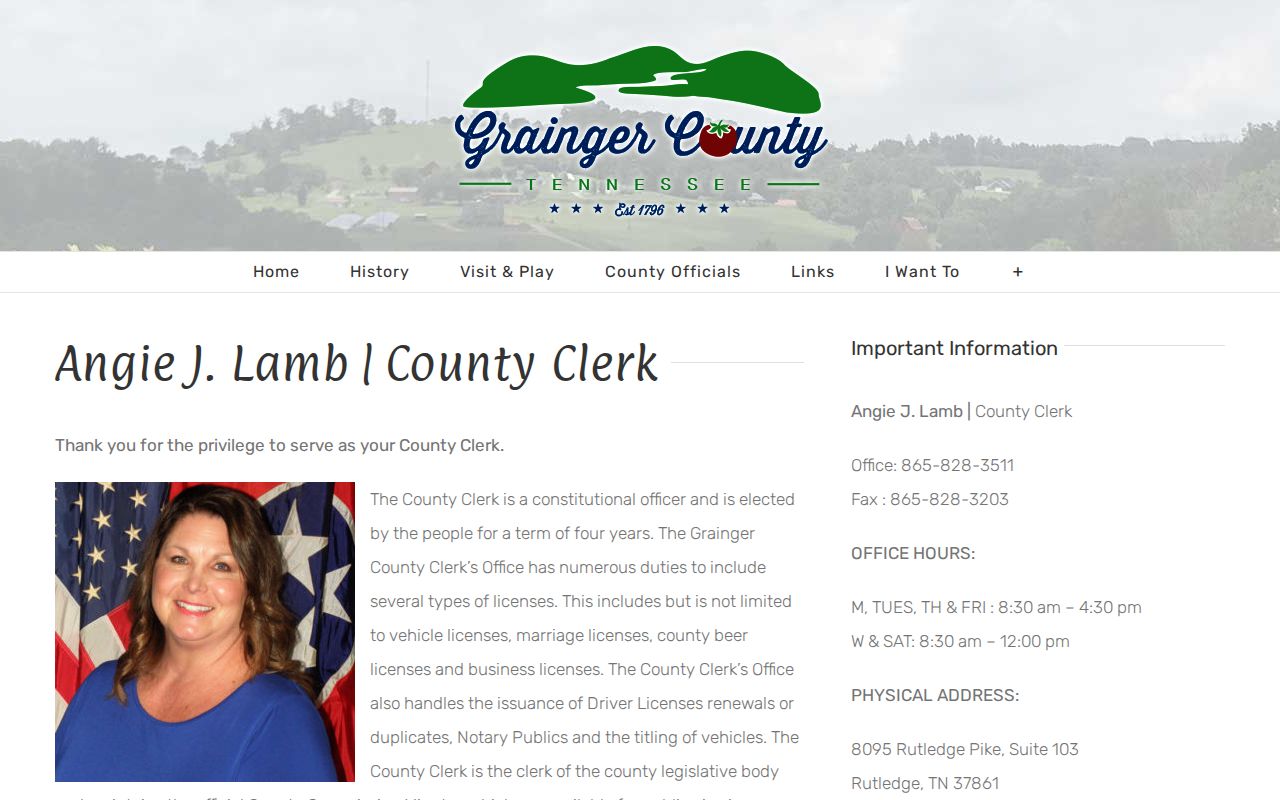
That office is official, yet its administrative files are not court case records. The separate Grainger County Clerk website covers its licenses, tags, and titles.
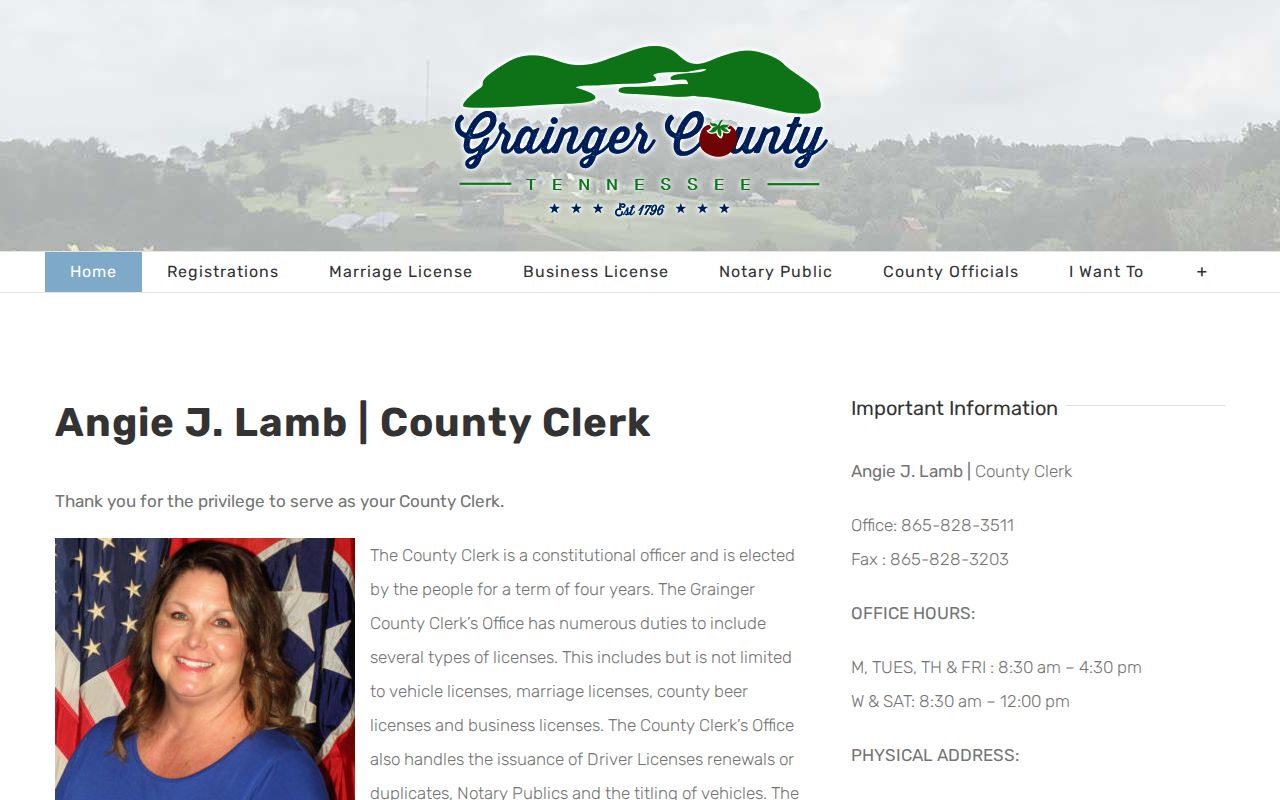
That service list is a quick check against mailing a pleading request to the wrong counter.
Kinds of Grainger Court Records
A docket is only a schedule or index. The case file can hold the papers that explain what actually occurred. What the public sees in a Grainger County court record may go well past the downloadable report. Access turns on the case type and filing practice. Retention rules, confidentiality law, and any sealing order matter too.
- Docket sheets and current calendar settings
- Complaints, petitions, answers, motions, and notices
- Warrants, summonses, affidavits, and service returns
- Signed orders, final judgments, and dispositions
- Public exhibits and payment or service material kept in the file
Name the item you want. Ask for a "current docket sheet" when you need the event history. Ask for a "calendar setting" when you just need a date. For the outcome, request a "final judgment" or "disposition." Ordering a complete file adds cost. One signed order often answers the question on its own.
Grainger Chancery Records Use Another Clerk
Chancery cases appear on the court calendar. Their records are not in the General Sessions civil PDF. Probate, trust, estate, injunction, and domestic matters go through the Clerk and Master. The statewide directory names Vickie B. Greenlee in that role. The Grainger County Clerk and Master page gives the official route to that office.
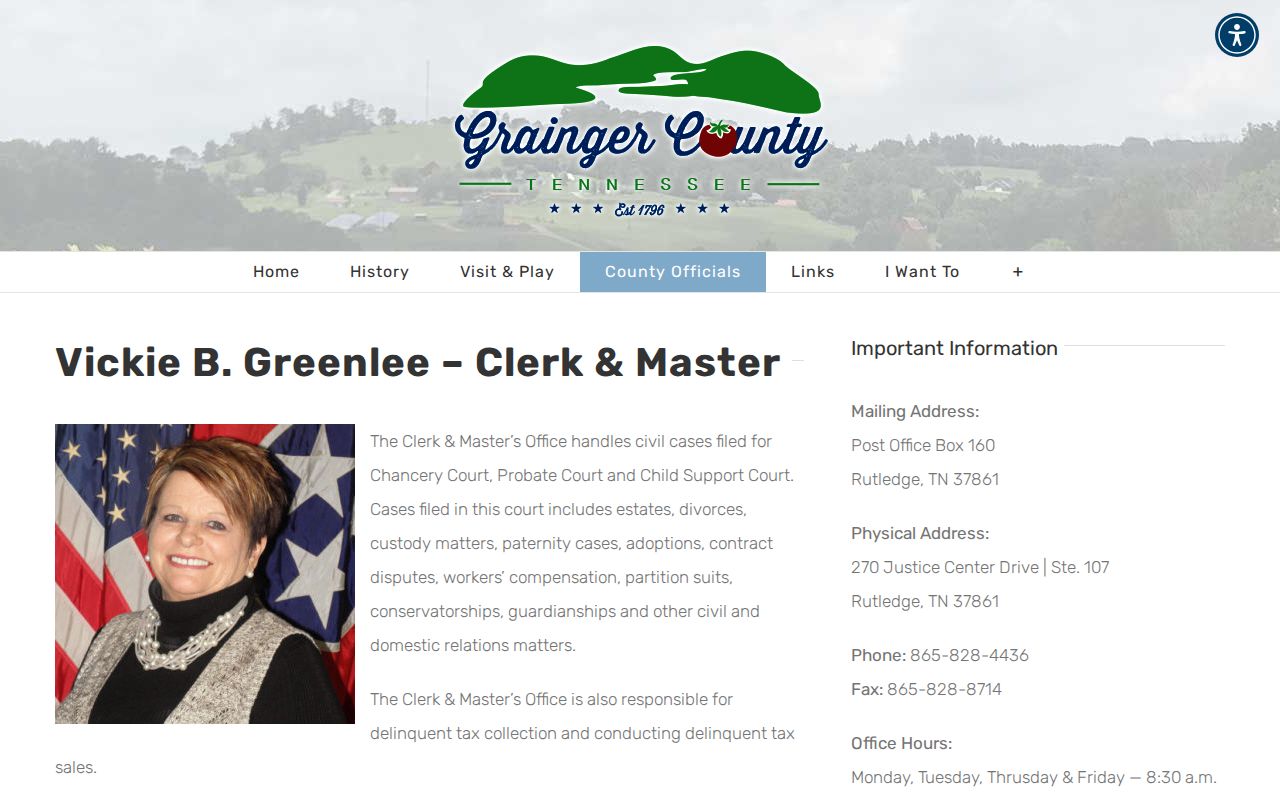
This split is why a civil description alone does not tell you which office holds the file. Always state the division in a Grainger County court case records request.
Routing check: Circuit and Sessions files begin with the Circuit Court Clerk; Chancery files begin with the Clerk and Master; city cases begin with the municipal clerk.
Grainger Court Records: What They Contain
County reports follow a pattern of local court, year, type, and sequence number. A criminal case looks like 29GS1-YYYY-CR-NNN; a civil case looks like 29GS1-YYYY-CV-NNN. Keep every digit and hyphen exactly as written. The PDF is a setting report, not a full electronic file.
| Case number | The identifier that locates the file and distinguishes CR from CV matters. |
|---|---|
| Docket sheet | The event or filing index, when maintained and public. |
| Pleadings | Complaints, petitions, answers, motions, and notices. |
| Orders and judgments | Signed rulings and outcome documents not linked from the sampled PDF. |
| Service and exhibits | Returns, attachments, or exhibits when filed, kept, and open. |
The county report lists date, time, judge, case style, party role, offense or civil subtype, and hearing type. It does not show a full chronology, scanned pleadings, disposition, sentence, or judgment amount. Ask for those items by name rather than guessing.
Grainger Electronic Filing Is Not Viewing
Tennessee lets courts adopt electronic filing by local rule. The AOC trial-court e-filing page describes that framework. Grainger offers no public-facing e-file system or case-document viewer, though. E-filing for registered users and public inspection are two different things. The statewide program does not mean each filed Grainger County court record is viewable online. Public access here still runs through PDF docket downloads and requests to the responsible clerk.
Copy Fees and Certification
A plain copy just reproduces the record. A certified copy carries the clerk's authentication. Which one you need depends on who receives it. The county publishes no per-page copy rate or certification fee, so ask the clerk before you order. Filing fees are not copy fees.
| Request | Published amount |
|---|---|
| Inspection of an open court record | Confirm with the custodian |
| Plain paper or electronic copy | Ask for a current estimate |
| Certified copy | Ask for copy and certification charges |
| Search, mailing, or remote delivery | Confirm before work starts |
Grainger County Circuit Court Clerk
270 Justice Center Drive, Suite 114
Rutledge, TN 37861
Mail: P.O. Box 157, Rutledge, TN 37861
865-828-3605
The clerk lists hours of 8:30 a.m. to 4:30 p.m. Monday, Tuesday, Thursday, and Friday, plus 8:30 a.m. to noon Wednesday. Call first. Official pages also show an older courthouse address.
Write a Focused Grainger Record Request
A written request should let staff pull one file without guessing. Include the request date, court and division, case number. Add the permitted case name, document description, and date range. Say whether you want inspection or copies, ask for a cost estimate, and give delivery contact information. The Tennessee Public Records Act FAQ explains the difference between inspection and copies. It also shows how to address a request to the right office.
Put your request in narrow terms. Court rules still control. The custodian decides what gets released, so a well-framed ask only goes so far. Still, it helps. If part of a Grainger County file is restricted, ask for the public copy with the sealed parts blacked out. One more thing. A docket search that comes up empty is not proof the case record is gone. The filing might sit with a municipal court, Chancery, or juvenile division, be sealed, or simply predate the posted PDFs and their date range.
Access Rules for Grainger Court Records
Tennessee Supreme Court Rule 34 sets the statewide standard. It governs public access to court records across Tennessee. The rule favors inspection but allows exclusions that flow from statute, court order, other rules, or confidentiality protections. Juvenile case files, sealed matters, and sensitive personal information can be limited or released only in redacted form. That framework governs Grainger County court records. The official Rule 34 page lays it out in full.
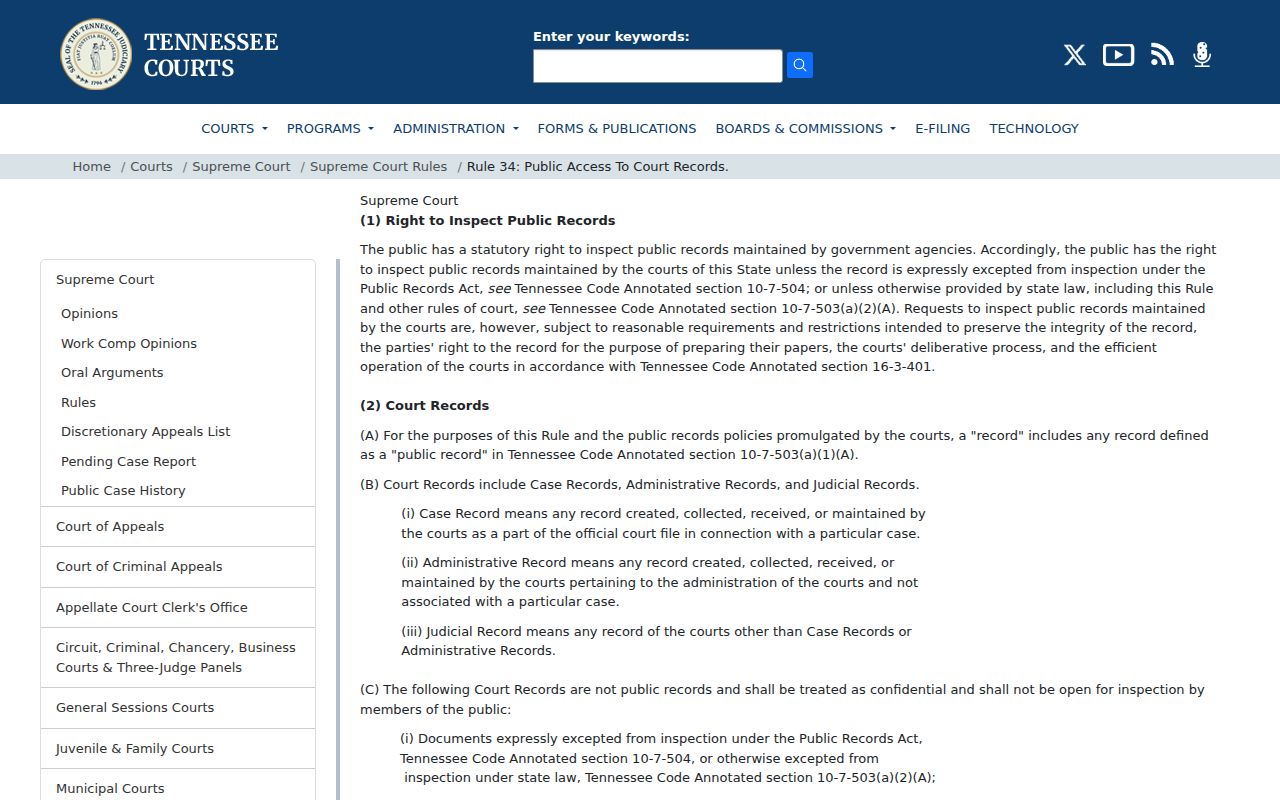
Open access does not mean every filing lands online. Redactions can still apply.
Key rules:
Tennessee Supreme Court Rule 34 governs access and exclusions for court records.
Tennessee Public Records Act guidance explains inspection and copy requests for covered public records.
If the clerk denies or redacts your request, push back through the custodian. Ask which rule, statute, or order controls, and request a public version if one can be produced.